Should Floor Care Be Included in Your Janitorial Contract—or Paid Per Job?
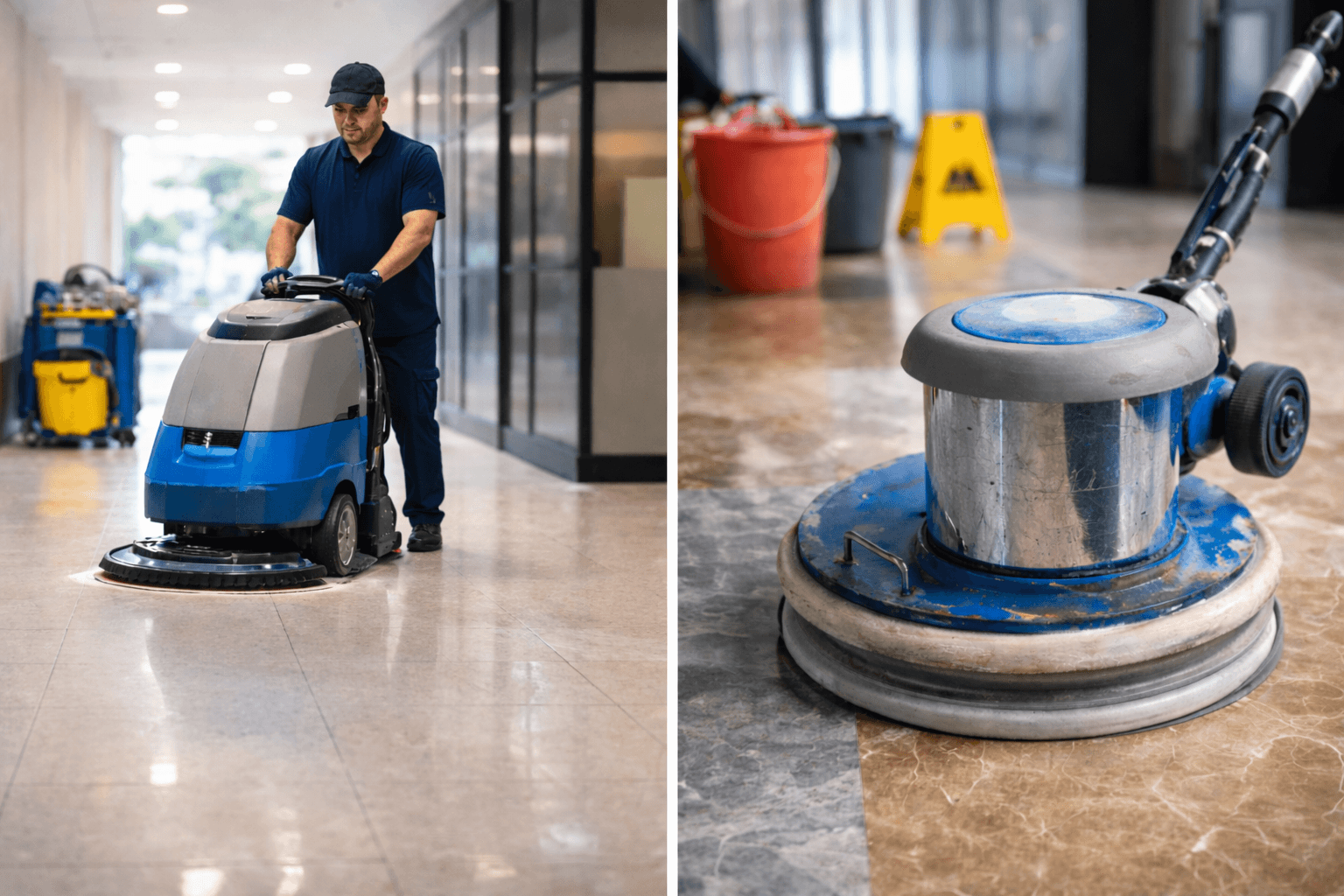
Keeping commercial floors in great shape goes beyond daily sweeping and mopping. From deep scrubbing to stripping and waxing, proper floor care protects your facility’s appearance, safety, and long-term investment.
One of the biggest decisions facility managers face is how to pay for these services: bundle floor care into a full janitorial contract or request and pay for it only when needed. Below is a breakdown of both options, along with their benefits and drawbacks, to help you decide what works best for your operation.
Option 1: Including Floor Care in Your Janitorial Program
With this approach, floor maintenance is built into your ongoing service agreement. Your cleaning provider handles routine upkeep and scheduled deep care as part of the regular program.
Pros
Predictable Budgeting Monthly costs stay consistent, making it easier to plan and avoid surprise expenses.
Consistent Maintenance Regular attention helps protect finishes and coatings, extending the life of your flooring and preventing premature wear.
Convenience All cleaning and floor care tasks are managed under one agreement, reducing scheduling and administrative work.
Improved Appearance and Hygiene Ongoing care keeps floors looking polished and professional while supporting safety and cleanliness standards.
Long-Term Value Preventive maintenance can reduce the need for costly repairs or replacements over time. Equipment is often kept on-site, minimizing extra service fees.
Cons
Paying for Services You May Not Always Need Facilities with light foot traffic may not require frequent deep floor care, which could lead to unnecessary costs.
Less Flexibility Bundled programs can limit your ability to customize how often certain services are performed or which products and methods are used.
Potential for Lower Priority When floor care is one part of a larger contract, it may not always receive the same level of attention as daily cleaning tasks.
Option 2: Paying for Floor Care as Needed
This model allows you to request floor services only when necessary and pay per job instead of on a recurring basis.
Pros
Greater Cost Control You only pay when services are required, which can work well for facilities with minimal or seasonal needs.
Flexibility and Customization Choose exactly what type of service you want—deep scrubbing, waxing, or specialty treatments—when and where it’s needed.
Targeted Maintenance Focus resources on high-traffic or problem areas without committing to a full-building program.
Cons
Unpredictable Expenses Emergency spills, stains, or unexpected wear can lead to higher or sudden costs.
Inconsistent Upkeep Without a regular schedule, floors may deteriorate faster—especially in busy areas—leading to bigger repair or replacement expenses later.
More Administrative Work Coordinating quotes, scheduling, and payments for each job can become time-consuming.
Quality May Vary Infrequent service visits can sometimes lead to less thorough results compared to a long-term, accountable partnership.
Final Thoughts
There’s no one-size-fits-all answer. The right choice depends on your traffic levels, budget preferences, and how much consistency you need.
Choose a bundled program if you want predictable costs, convenience, and consistent long-term maintenance.
Choose pay-per-job services if your floor care needs are infrequent and you prefer flexibility and tighter control over spending.
By evaluating how often your floors require professional care and how much management time you can dedicate, you can select the option that delivers the best overall value for your facility.