The Hidden Cleaning Challenges in Veterinary Clinics (And How to Solve Them)
The Hidden Cleaning Challenges in Veterinary Clinics (And How to Solve Them)
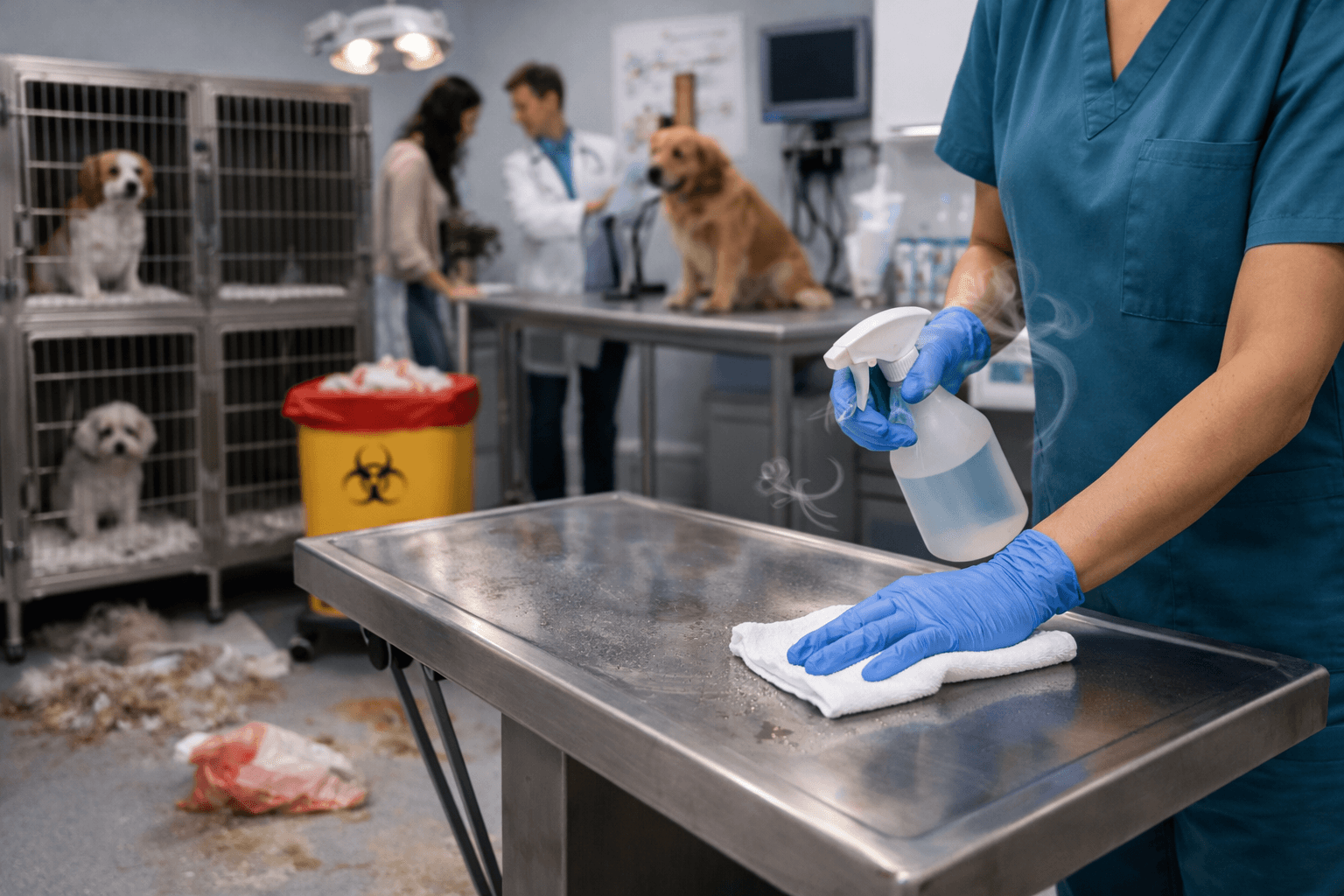
Veterinary clinics are among the most demanding environments to maintain. Unlike traditional offices, these facilities deal with biological waste, strong odors, and strict sanitation requirements on a daily basis.
While many clinic owners focus on patient care and operations, cleaning challenges often go unnoticed—until they start affecting safety, compliance, and client perception.
In this article, we’ll break down the most common cleaning challenges veterinary clinics face and how to effectively address them.
1. Persistent Odors That Are Hard to Eliminate
One of the biggest challenges in veterinary clinics is controlling odors caused by animals, waste, and cleaning chemicals.
Even with regular cleaning, smells can linger in:
- Exam rooms
- Kennels and boarding areas
- Waiting rooms
These odors can negatively impact client experience and create an impression of poor hygiene.
Solution:
Use proper odor-neutralizing treatments—not just masking fragrances. Professional cleaning services often apply enzyme-based solutions that eliminate odor at the source.
2. Hair, Dander, and Allergens Build Up Quickly
Animal hair and dander accumulate rapidly, especially in high-traffic areas. These particles can settle on floors, furniture, and air vents, contributing to poor indoor air quality.
Over time, this buildup can:
- Trigger allergies
- Affect staff comfort
- Create an unclean appearance
Solution:
Frequent vacuuming with HEPA filtration and routine surface cleaning are essential to control buildup and maintain air quality.
3. Cross-Contamination Risks Between Patients
Veterinary clinics handle multiple animals daily, increasing the risk of cross-contamination between patients.
Without proper sanitation, bacteria and viruses can spread through:
- Exam tables
- Floors
- Equipment surfaces
This is a serious concern for both animal health and clinic liability.
Solution:
Implement strict disinfection protocols using hospital-grade disinfectants, especially between patient visits.
4. Biohazard Waste Handling
Veterinary clinics regularly deal with biohazard materials such as blood, bodily fluids, and contaminated supplies.
Improper handling can lead to:
- Health risks
- Regulatory issues
- Workplace safety concerns
Solution:
Ensure proper disposal procedures are followed and work with cleaning providers trained in biohazard handling.
5. High-Traffic Areas Get Dirty Faster
Areas like entrances, hallways, and exam rooms experience constant foot traffic from both staff and pet owners.
This leads to:
- Faster dirt accumulation
- Floor wear and tear
- Increased cleaning demands
Solution:
Adopt a cleaning schedule based on traffic patterns rather than just square footage to maintain consistency and cleanliness.
6. Maintaining Compliance and Standards
Veterinary clinics must meet strict cleanliness and sanitation standards to ensure safety and regulatory compliance.
Falling short can result in:
- Failed inspections
- Reputational damage
- Health risks
Solution:
Partner with a professional cleaning provider that understands veterinary-specific requirements and compliance standards.
Why These Challenges Matter
Cleaning is not just about maintaining appearances—it directly affects safety, efficiency, and client trust.
A poorly maintained clinic can lead to:
- Negative reviews
- Increased health risks
- Operational disruptions
Final Thoughts
Veterinary clinics face unique cleaning challenges that require more than basic janitorial services.
Addressing these issues proactively helps create a safer, cleaner, and more professional environment for both staff and patients.
Investing in the right cleaning strategy—or the right cleaning partner—can make a significant difference in long-term operations and client satisfaction.